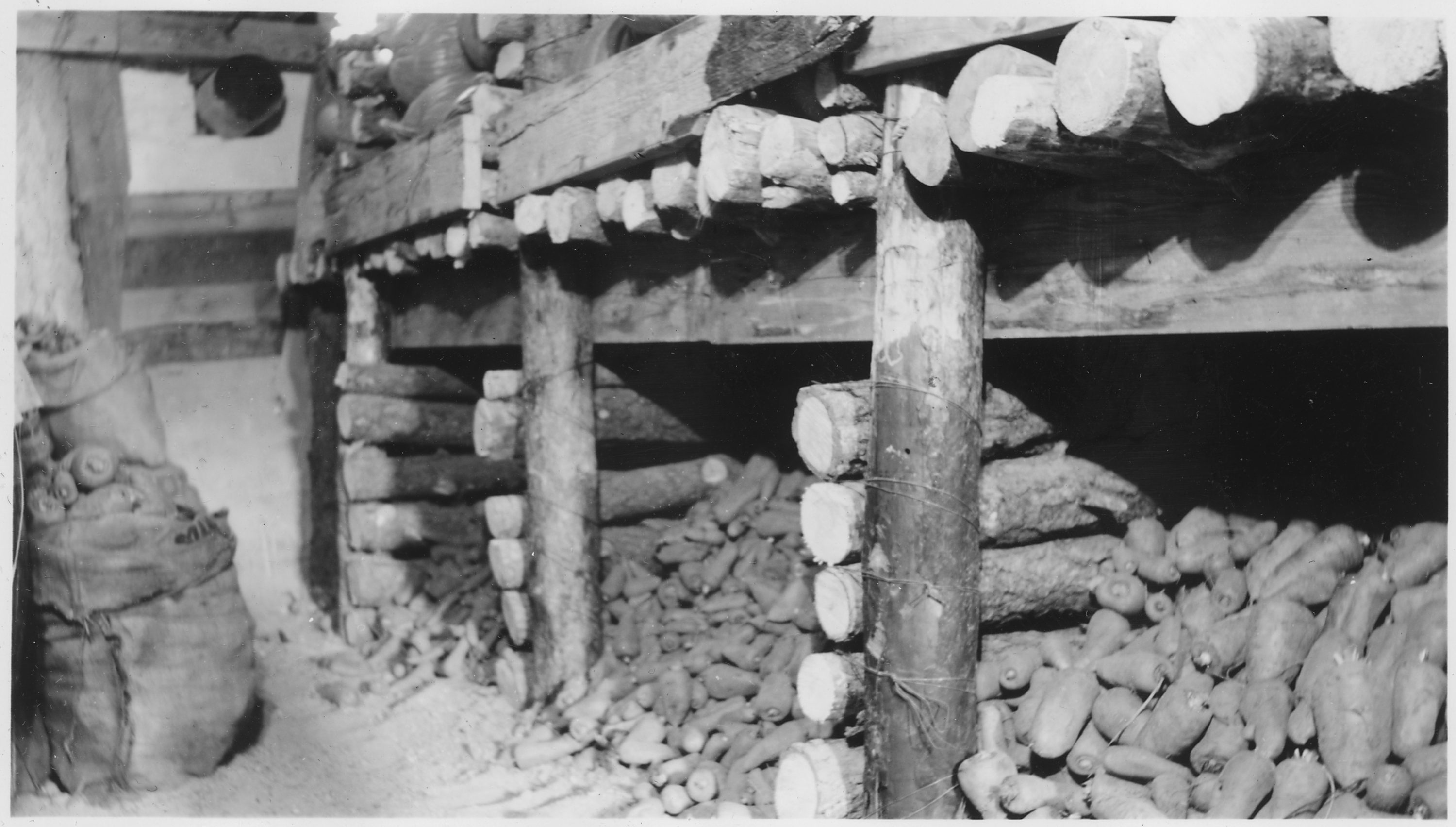
A root cellar is less a building than a set of conditions. It stays cold without freezing, holds moisture in the air, moves that air slowly, and keeps light out. Underground spaces do this naturally because the surrounding soil buffers the temperature swings that a heated house cannot. The earth a metre or two down stays close to the local average annual temperature, which across much of southern Canada sits in the single digits Celsius for most of the storage season.
If you can read four things — a thermometer, a hygrometer, the smell of the air, and the firmness of the crops — you can run a cellar without much else.
What the space is actually doing
Stored vegetables are still alive. They respire, slowly burning their own sugars and giving off heat, carbon dioxide, water vapour, and in some cases ethylene gas. Cold slows that respiration; a potato at 4°C ages far slower than one at 18°C. Humidity keeps roots from shrivelling as they lose water to dry air. Airflow carries away the warmth and gases that respiration produces, so they do not build up and accelerate spoilage.
The freezing line is the hard limit
Cold is good until it crosses 0°C. Once water inside the cells freezes and the crop thaws, the texture collapses. A cellar that occasionally dips to freezing needs a backup — a heavy blanket over the bins, or a container of water that buffers the temperature as it freezes.
Target conditions by crop family
| Crop family | Temperature | Humidity |
|---|---|---|
| Roots (carrot, beet, turnip) | 0–2°C | 90–95% |
| Potatoes | 4–7°C | 85–90% |
| Cabbage, leeks | 0°C | 90–95% |
| Onions, garlic | 0–5°C | 60–70% |
| Winter squash, pumpkin | 10–15°C | 50–70% |
The table makes the central tension obvious: most crops want it cold and damp, but onions and squash want it warmer or drier. A single cellar cannot satisfy everyone, which is why a practical setup usually has zones — the coldest floor-level corner for roots, a higher shelf near the door for squash kept slightly warmer.
Three ways to approximate a cellar
1. A basement cold room
In many older Canadian houses, a corner of the basement on the north side, against an outside wall, runs colder than the rest. Sealing it from the home's heat and adding a vent to the outside air can pull it into root-cellar range through winter. The challenge in newer, well-insulated homes is the opposite: the basement never gets cold enough, and a passive cold room becomes hard to achieve.
2. An insulated bin or cooler
For a smaller harvest, a styrofoam cooler or an insulated tote in an unheated garage can hold roots packed in damp sand. The sand stabilises both temperature and humidity, and the insulation slows the swing when the garage warms in afternoon sun. The risk is freezing on the coldest nights, so this works best where winter stays near, not far below, zero.
3. A buried container
The oldest trick is to bury a clean barrel or drum at an angle in well-drained ground, fill it with straw-packed roots, and cap it with a lid and a mound of straw and soil. The earth does the temperature work. The drawback is access: digging into a frozen mound in February is unpleasant, so a buried store is best for crops you will pull all at once rather than dip into weekly.
Condensation is the quiet enemy
Warm, moist air meeting a cold surface drips. Water pooling on a bin lid or running down a wall lands on the crops below and starts rot. A little airflow and avoiding sealed plastic over cold produce keeps surfaces dry.
Running the space through the season
Bring crops in cool, ideally lifted on a dry day and after any required curing. Pack roots so air can still move around them rather than sealing them airtight. Then visit on a regular schedule — once a month is a reasonable minimum — to pull anything soft, spotted, or sprouting before it spreads. Most storage failures are not dramatic; they are one overlooked vegetable seeding decay through a whole bin.
For food-safety questions, particularly around any preserving you do with the surplus, consult the public resources below rather than relying on storage folklore.